The allure of supercars has captivated automotive enthusiasts for decades, representing the pinnacle of performance, engineering, and design. From the early days of automotive history to the present, certain models have become icons, not just for their speed and power, but also for their striking aesthetics and innovative technologies. This article delves into the legendary supercars that have shaped the industry, celebrating their unique contributions and the legacies they have forged.
One cannot discuss supercar legends without mentioning the Ferrari 250 GTO, a car that epitomizes the blend of beauty and performance. Produced in the early 1960s, the GTO was designed for racing but quickly became a symbol of exclusivity and desirability. With its sleek lines and powerful V12 engine, it achieved great success on the racetrack, winning numerous competitions. The 250 GTO’s rarity—only 36 units were made—has led to it becoming one of the most valuable cars in the world, fetching prices in the tens of millions at auctions.
In parallel to Ferrari’s triumphs, Lamborghini emerged as a formidable contender in the supercar arena. The Lamborghini Miura, launched in 1966, is often credited with setting the standard for modern supercars. With its mid-engine layout and striking design, the Miura showcased groundbreaking engineering. Its 3.9-liter V12 engine delivered exhilarating performance, propelling it to a top speed of over 170 mph. The Miura’s dramatic styling, characterized by its low profile and sharp lines, solidified Lamborghini’s reputation as a manufacturer of bold, exotic cars.
As the automotive landscape evolved, the 1980s saw the rise of another iconic supercar: the Ferrari F40. Launched in 1987 to celebrate Ferrari’s 40th anniversary, the F40 was the last car personally approved by Enzo Ferrari. It combined a lightweight design with a twin-turbocharged V8 engine, producing an astonishing 478 horsepower. The F40’s aggressive aerodynamics and minimalist interior were reflective of its purpose—pure performance. It became a symbol of the excess and excitement of the 1980s supercar culture, cementing its place in automotive history.
Meanwhile, Porsche was quietly revolutionizing the supercar segment with the introduction of the Porsche 959 in the mid-1980s. Initially designed for Group B rally racing, the 959 combined cutting-edge technology with performance. It featured all-wheel drive, adjustable suspension, and a twin-turbocharged flat-six engine, making it one of the fastest production cars of its time. The 959’s engineering excellence and high-tech features paved the way for future Porsche models, influencing the design of the iconic Porsche 911 Turbo.
The 1990s brought forth the McLaren F1, a car that would set the benchmark for supercar performance. Introduced in 1992, the F1 featured a central driving position, a lightweight carbon fiber monocoque chassis, and a BMW-sourced V12 engine. It held the title of the fastest production car in the world for over a decade, with a top speed of 240 mph. Beyond its raw speed, the F1 was celebrated for its meticulous attention to detail, luxury, and innovative design, making it a masterpiece of automotive engineering.
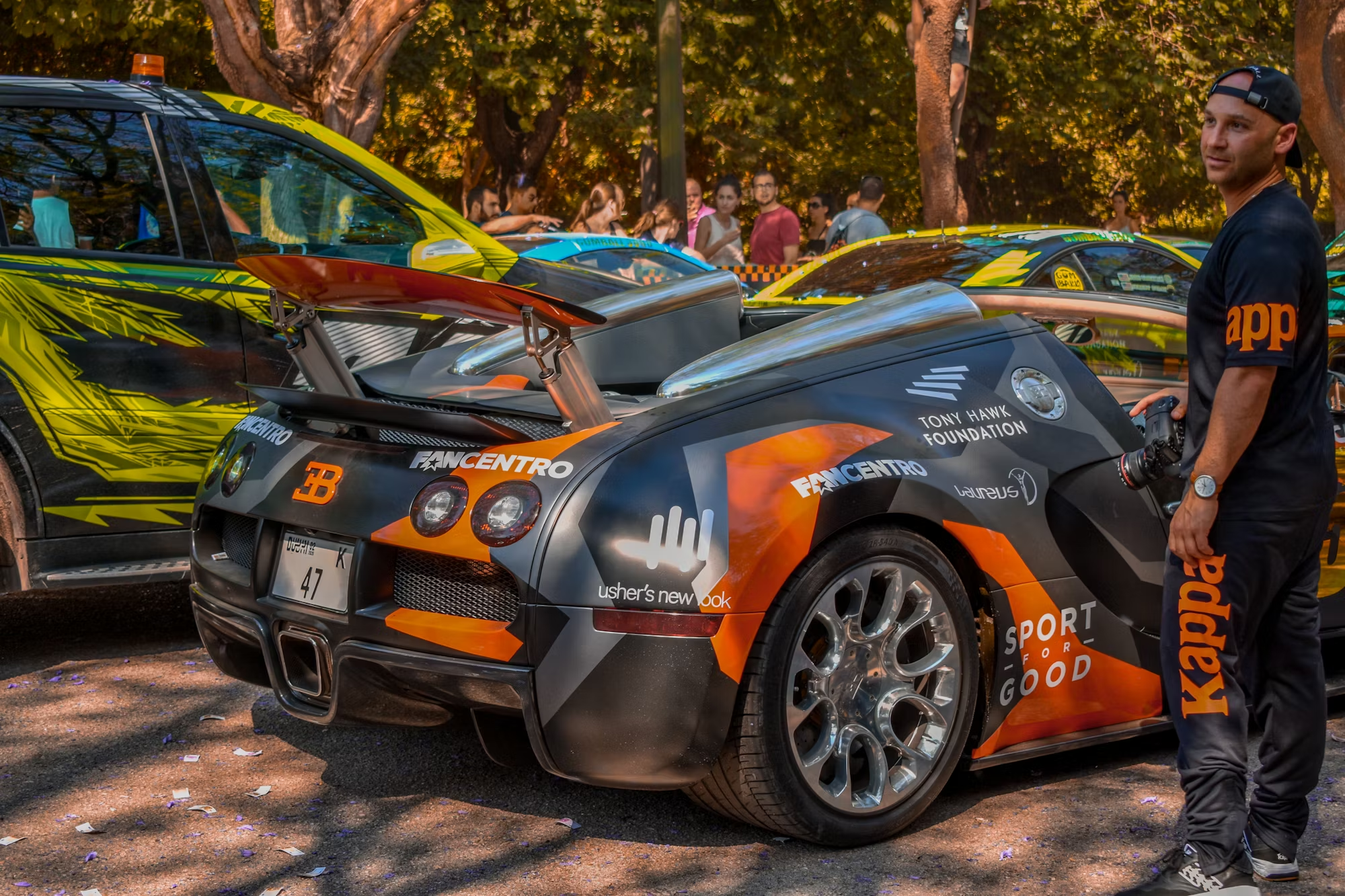
As the new millennium approached, the automotive world was introduced to the Bugatti Veyron, a car that redefined what a supercar could be. Launched in 2005, the Veyron boasted a quad-turbocharged W16 engine capable of producing 1,001 horsepower. With a top speed exceeding 250 mph, it was the first production car to break the 250 mph barrier. The Veyron’s luxurious interior, advanced engineering, and performance set a new standard in the supercar market, demonstrating that power and luxury could coexist in perfect harmony.
In recent years, the supercar landscape has been further transformed by the advent of hybrid technology. The Porsche 918 Spyder, introduced in 2015, showcased how hybrid powertrains could deliver both performance and efficiency. With a combined output of 887 horsepower from its V8 engine and electric motors, the 918 Spyder could accelerate from 0 to 60 mph in just 2.5 seconds while achieving impressive fuel economy. This model proved that the future of supercars could embrace sustainability without sacrificing excitement or performance.
The rise of electric vehicles has also made a significant impact on the supercar segment, with brands like Rimac leading the charge. The Rimac C_Two, with its staggering 1,914 horsepower and 0-60 mph time of just 1.85 seconds, represents the pinnacle of electric supercar performance. Its all-electric powertrain offers instantaneous torque and a driving experience that challenges the traditional boundaries of speed. Rimac’s commitment to innovation and performance demonstrates that electric supercars are not only viable but also incredibly thrilling.
Meanwhile, Lotus has entered the electric supercar race with the Lotus Evija, boasting a lightweight design and a focus on performance. With a target output of 2,000 horsepower, the Evija is set to redefine what is possible in the realm of electric supercars, showcasing how traditional brands are adapting to the changing landscape of automotive technology.
As we look to the future, the legacy of these supercar legends continues to inspire new generations of automotive enthusiasts. Each model represents not only a feat of engineering but also a cultural icon that reflects the desires and aspirations of its time. The stories behind these vehicles are woven into the fabric of automotive history, influencing design, performance, and innovation.
In conclusion, supercars are more than just high-performance vehicles; they are symbols of engineering excellence, design prowess, and cultural significance. From the early classics like the Ferrari 250 GTO and Lamborghini Miura to modern marvels like the Rimac C_Two and Lotus Evija, these icons have shaped the automotive landscape and continue to push the boundaries of what is possible. As manufacturers embrace new technologies and sustainability, the future of supercars promises to be as exciting and innovative as their storied past. The journey of supercars is far from over, and the passion for performance, design, and the thrill of the drive will undoubtedly endure for generations to come.